Why transport health and safety is different
Most of a transport operator's risk happens away from the depot. Drivers work alone, on public roads, on customers' premises and on tail lifts at the back of a lorry in the dark. Back at base there is the yard, where vehicles reverse among pedestrians, and often a workshop with jacks, pits, pressure washers and diesel exhaust. A generic office health and safety pack does not touch most of this.
We are a transport health and safety consultant team made up of former transport managers, health and safety professionals and qualified trainers, with around 20 years in transport. We build health and safety management systems for fleet operators that match how the operation actually runs, stand up to an HSE visit or a client audit, and that your managers can keep up to date without us.
The legal framework for transport operators
| Legislation | What it means for a fleet operator |
|---|---|
| Health and Safety at Work etc. Act 1974 (HSWA) | The general duty to protect employees and others so far as reasonably practicable. It applies to driving for work just as it applies in the yard. Employers with five or more employees need a written health and safety policy. |
| Management of Health and Safety at Work Regulations 1999 | Suitable and sufficient risk assessments (significant findings recorded where you employ five or more), competent health and safety assistance, emergency procedures, training, and information for temporary and agency workers. |
| Provision and Use of Work Equipment Regulations 1998 (PUWER) | Work equipment, including vehicles, tail lifts, pallet trucks and workshop tools, must be suitable, maintained, inspected where needed and used only by people who have been trained. |
| Lifting Operations and Lifting Equipment Regulations 1998 (LOLER) | Tail lifts and other lifting equipment must be thoroughly examined at set intervals, and lifting operations planned and supervised. |
| Control of Substances Hazardous to Health Regulations 2002 (COSHH) | Assessment and control of diesel engine exhaust, fuels, AdBlue, oils, battery acid and cleaning chemicals. |
| Reporting of Injuries, Diseases and Dangerous Occurrences Regulations 2013 (RIDDOR) | Reporting certain injuries, diseases and dangerous occurrences to HSE, and keeping records. |
| Road Transport (Working Time) Regulations 2005 | Working time limits, breaks and record keeping for mobile workers covered by the drivers' hours rules. |
| Manual Handling Operations Regulations 1992 | Assessing and reducing manual handling during loading, unloading and multi-drop work. |
| Work at Height Regulations 2005 | Sheeting, strapping, trailer beds, tail lift platforms and workshop work above ground level. |
| Personal Protective Equipment at Work Regulations 1992 (as amended in 2022) | Suitable PPE provided free and maintained. Since 6 April 2022 the duty also covers limb (b) workers, which can include casual drivers who are workers but not employees. |
| Control of Noise at Work Regulations 2005 | Noise exposure assessment in workshops and wash bays. |
| Regulatory Reform (Fire Safety) Order 2005 (as amended by the Fire Safety Act 2021 and Building Safety Act 2022) | A recorded fire risk assessment for your operating centre, kept under review. |
| Corporate Manslaughter and Corporate Homicide Act 2007 | Criminal liability for the organisation where a gross failure in the way senior management runs the business causes a death. |
Driving for work and working time
HSE is clear that health and safety law applies to on-the-road work activities in the same way as to any other work. That means a risk assessment for driving, covering the driver, the vehicle and the journey, and arrangements for fatigue, mobile phones, lone working and what drivers do after a collision or breakdown.
Fatigue is where drivers' hours and health and safety meet. The drivers' hours rules (assimilated Regulation (EC) 561/2006, or AETR for some international journeys) limit driving. The Road Transport (Working Time) Regulations 2005 limit total working time, including loading, paperwork and waiting. They apply to drivers covered by the assimilated (GB/EU) or AETR drivers' hours rules and set:
- an average of 48 hours a week over a 17-week reference period (extendable to 26 weeks by agreement)
- a maximum of 60 hours in any single week
- a limit of 10 hours' working time in any 24-hour period where night work is done
- no more than six hours' work without a break
- working time records kept for two years
Many operators manage tachograph driving time well and never total up other work. That gap shows up in a client audit, a DVSA investigation or, worst of all, after a fatigue-related collision.
Corporate manslaughter: what transport directors need to know
The Corporate Manslaughter and Corporate Homicide Act 2007 makes an organisation criminally liable where the way its activities are managed or organised causes a death and amounts to a gross breach of a duty of care, with senior management failings a substantial part of that breach. For an operator, the realistic scenario is a fatal collision traced back to excessive hours, poor maintenance or a driver nobody checked was fit to drive.
On conviction the fine is unlimited. The court may also make a remedial order requiring the failings to be put right, and a publicity order requiring the company to publicise the conviction. Individual directors can still face prosecution under the Health and Safety at Work etc. Act 1974. The defence is a management system that identifies the risks, puts controls in place and checks they are working, with records to prove it.
PUWER, LOLER and tail lifts
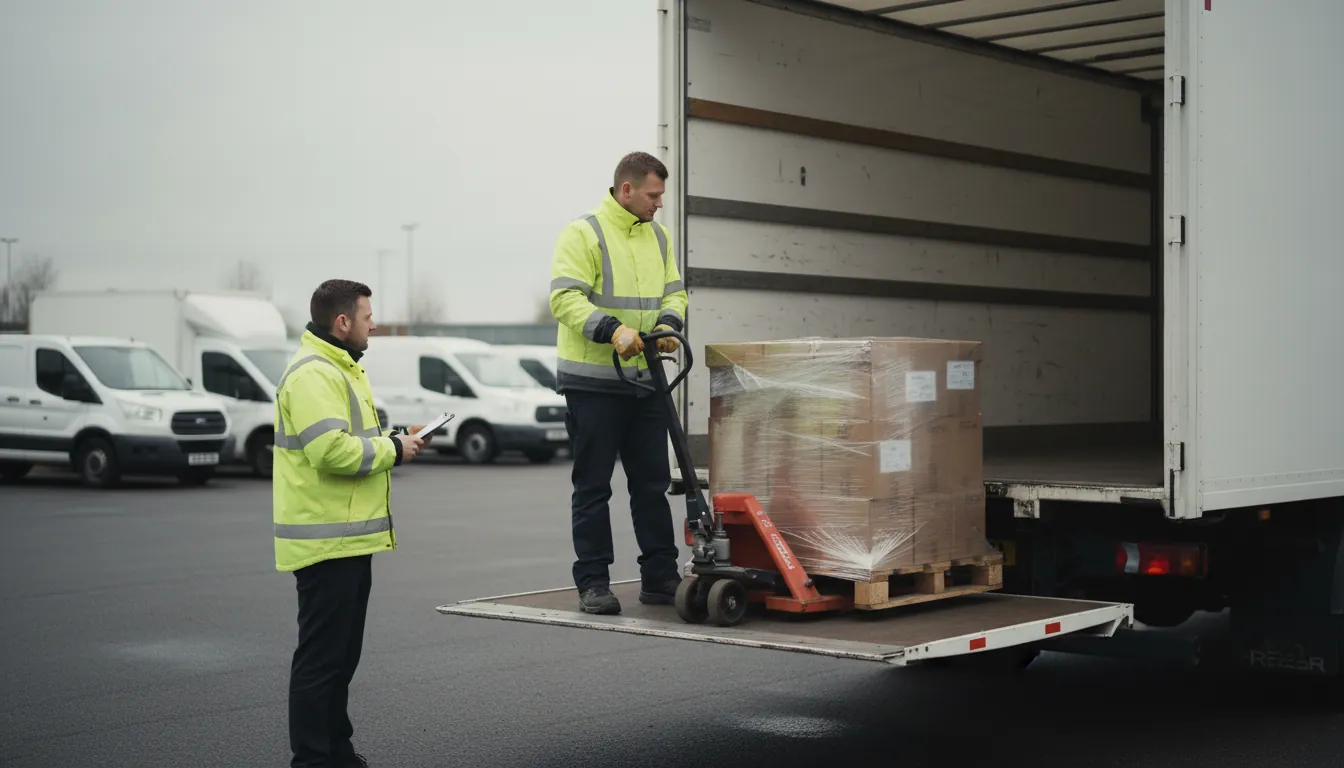
PUWER applies to all work equipment your people use: vehicles, tail lifts, pallet trucks, forklifts, jacks and axle stands, tyre equipment, pressure washers. Equipment must be suitable for the job, maintained in a safe condition, inspected where deterioration could cause danger, and used only by people who have had adequate training.
LOLER adds specific duties for lifting equipment. A tail lift must be thoroughly examined by a competent person at least every six months where people ride the platform, at least every 12 months where it only lifts goods, or at intervals set by a written examination scheme drawn up by a competent person. HSE's guidance for tail lifts uses the six-month interval, or an examination scheme. The competent person must be sufficiently independent and impartial and should not be the person who does the routine maintenance. Keep each report until the next one is made, or for two years, whichever is later.
LOLER is enforced by HSE or the local authority, not the Traffic Commissioner, although DVSA and FORS auditors will look for the reports in your maintenance records. Our tail lift training covers the operator side.
COSHH: the hazards operators miss
Diesel engine exhaust has been classified as a Group 1 carcinogen by the International Agency for Research on Cancer since 2012. Running engines in enclosed workshops, wash bays and loading docks needs assessing and controlling, usually through extraction, procedures for running engines indoors and keeping doors open. Diesel, AdBlue, engine oils, brake cleaner, battery acid and vehicle wash chemicals all need a COSHH assessment, with safety data sheets on file and the controls explained to the people who use them.
RIDDOR: what is reportable in transport
RIDDOR deadlines:
- Deaths and specified injuries: notify HSE without delay and report within 10 days.
- Injuries that keep a worker off normal duties for more than seven consecutive days: report within 15 days.
- Keep records of reportable incidents for three years.
The point transport operators most often get wrong is the road traffic exception. Most injuries from vehicle movements on public roads are not reportable under RIDDOR. But incidents during loading or unloading are reportable as normal, even at the roadside, as are incidents involving work on or alongside the road and incidents on private sites such as your yard or a customer's premises. A driver who falls from a trailer bed at a delivery address and suffers a reportable injury must be reported. A driver injured in a collision on the motorway generally is not.
Fire safety at your operating centre
Workplace fire safety in England and Wales comes from the Regulatory Reform (Fire Safety) Order 2005. Scotland has its own legislation under the Fire (Scotland) Act 2005. Since 1 October 2023, every responsible person in England must record their fire risk assessment in full, whatever the number of employees. For an operating centre that means fuel storage, battery charging (including electric vehicle and forklift charging), workshops, parked vehicles and the office. You will sometimes see the Fire Safety (England) Regulations 2022 quoted for depots. Those regulations deal with multi-occupied residential buildings such as blocks of flats. They do not apply to a transport operating centre.
What has changed recently
There has been no overhaul of the core health and safety regulations in 2025 or 2026. The changes that catch operators are in the detail around them:
- Fire risk assessments must be recorded in full by all businesses in England (since October 2023). Small operators who relied on the old five-employee threshold are still caught out.
- PPE for limb (b) workers (since April 2022). Casual drivers who are workers rather than employees are now covered.
- DVSA Guide to Maintaining Roadworthiness (latest update April 2025). Every safety inspection now includes a laden brake performance assessment. Your PUWER maintenance arrangements for vehicles should reflect that.
- FORS Standard v7.2 applies to audits from 1 September 2026. M8 Health and safety and D6 Health and eyesight sit alongside your health and safety system, so it pays to build them together. See our FORS service.
- Assimilated law. Former EU rules such as the drivers' hours regulation are now called assimilated law. Policies that still refer to retained or EU law need a tidy-up.
Where operators go wrong
- An office-based risk assessment pack with nothing on driving, loading, tail lifts or the yard.
- Assuming the maintenance contractor's LOLER sticker covers the operator's duties.
- Reporting road collisions to HSE that are not reportable, while missing loading and unloading injuries that are.
- No working time records beyond the tachograph.
- COSHH sheets filed but never explained to the people using the products.
- Policies signed by a director who has never read them.
What J&JL delivers
- Health and safety policy with a statement of intent, named responsibilities and arrangements written for your operation.
- Risk assessments for driving for work, loading and unloading, manual handling, work at height, tail lifts, lone working, workplace transport in the yard, workshop activities and diesel exhaust.
- COSHH assessments for every substance on site, with practical controls.
- PUWER and LOLER system: an equipment register, inspection schedule, thorough examination tracking and defect reporting tied into your vehicle maintenance records.
- RIDDOR procedure with a simple decision guide for managers, including the road traffic exception, plus incident investigation forms.
- Working time recording and monitoring arrangements.
- Fire risk assessment for the operating centre, recorded in full.
- Driver induction pack and a driver handbook covering responsibilities, fatigue, collisions, drugs and alcohol and emergency procedures.
- Annual health and safety audit, with retained support available.
Walkaround checks and defect sign-off sit across both roadworthiness and PUWER. Roadworthy, our fleet compliance software, handles QR-code walkaround checks on the driver's phone, defect tracking and driver briefings with sign-off, if you want those records in one place.
Sources and further reading
- LOLER 1998, regulation 9 (thorough examination)
- LOLER 1998, regulation 11 (records)
- HSE: RIDDOR examples of reportable incidents
- RIDDOR 2013, regulation 4
- Corporate Manslaughter and Corporate Homicide Act 2007, section 10
- Road Transport (Working Time) Regulations 2005, regulation 4
- HSE: PPE at Work (Amendment) Regulations 2022
- GOV.UK: Fire Safety (England) Regulations 2022 fact sheet
Checked against the sources above on 5 October 2026.