Working with London operators
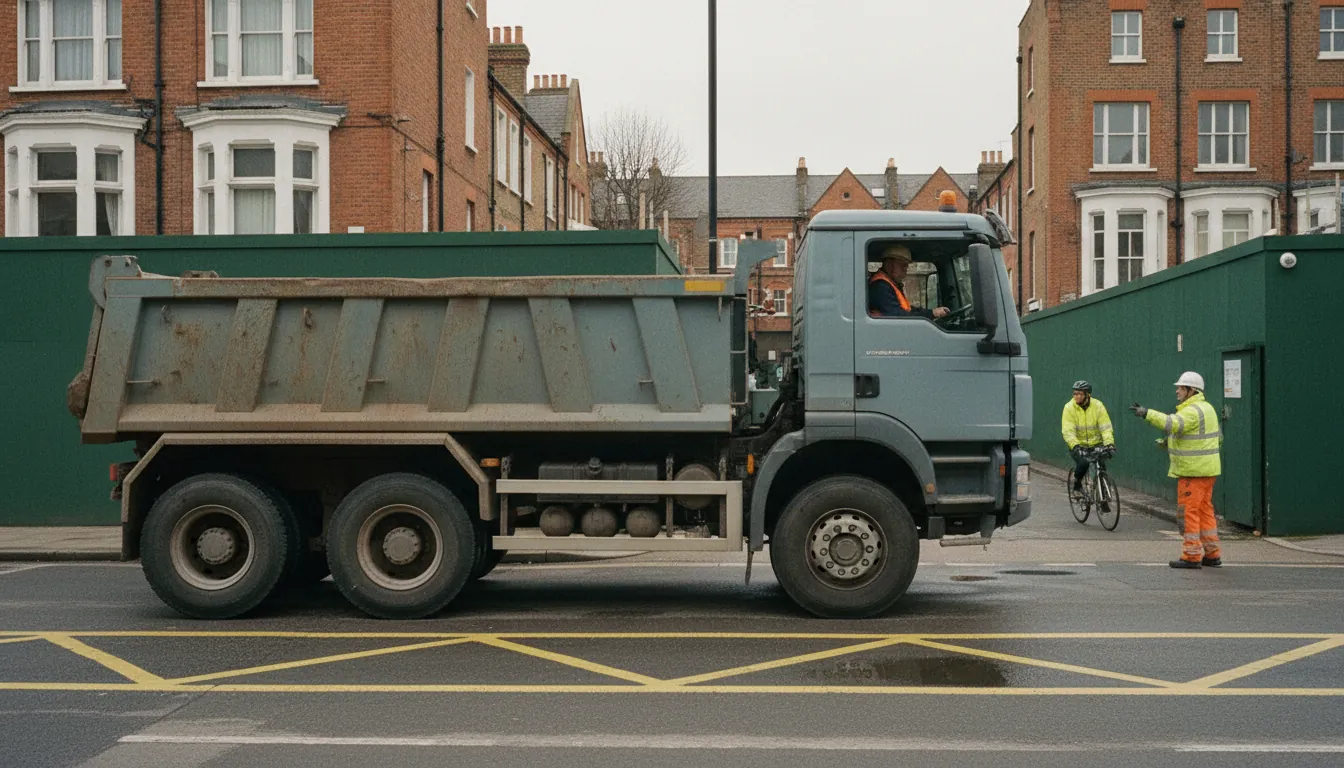
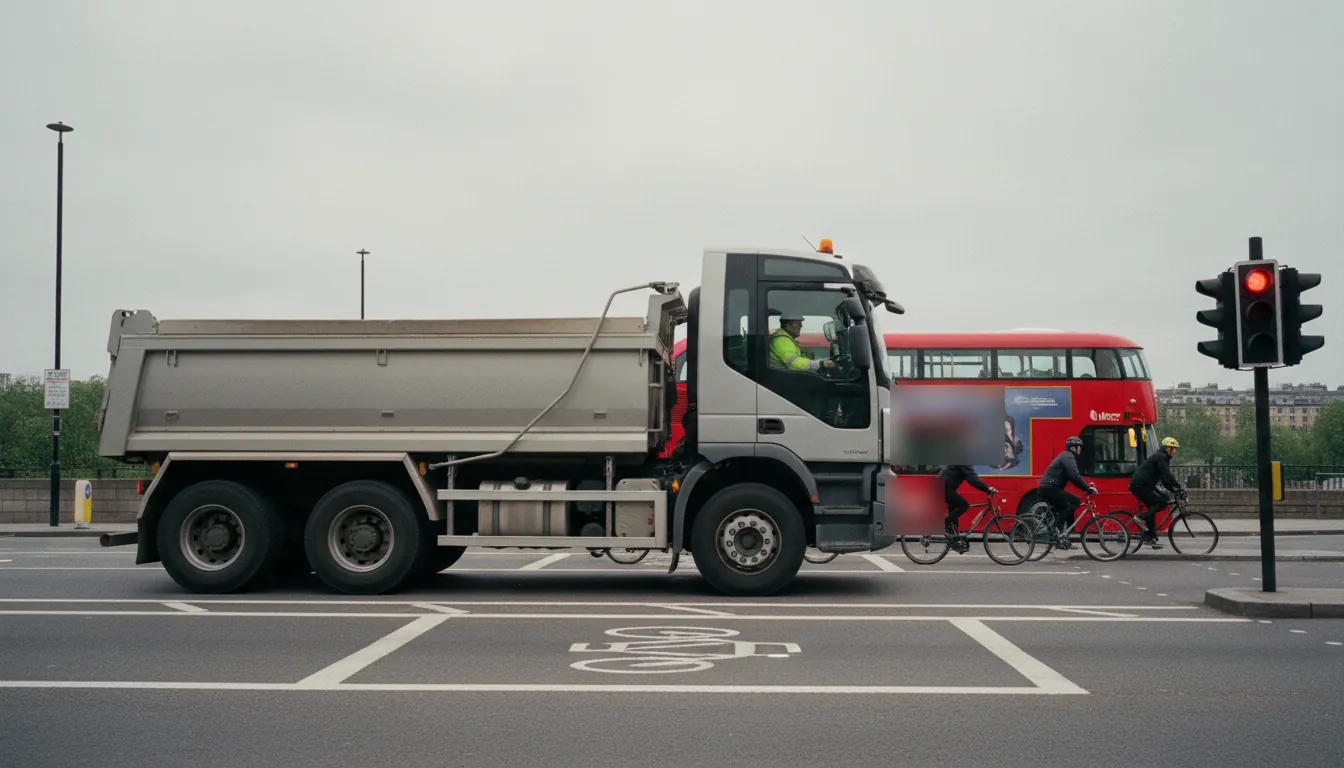
Most of our London work is FORS and Direct Vision. Our clients are construction logistics firms, muck-away and aggregates hauliers, waste and skip operators, and delivery fleets running into the capital from depots around the M25. Freight concentrates at Park Royal, around Heathrow, along the A13 through Barking and Dagenham, and in the Lea Valley. The North and South Circular, the A12, A2 and A40 carry it into the centre, where lorries share the road with buses, cyclists and pedestrians.
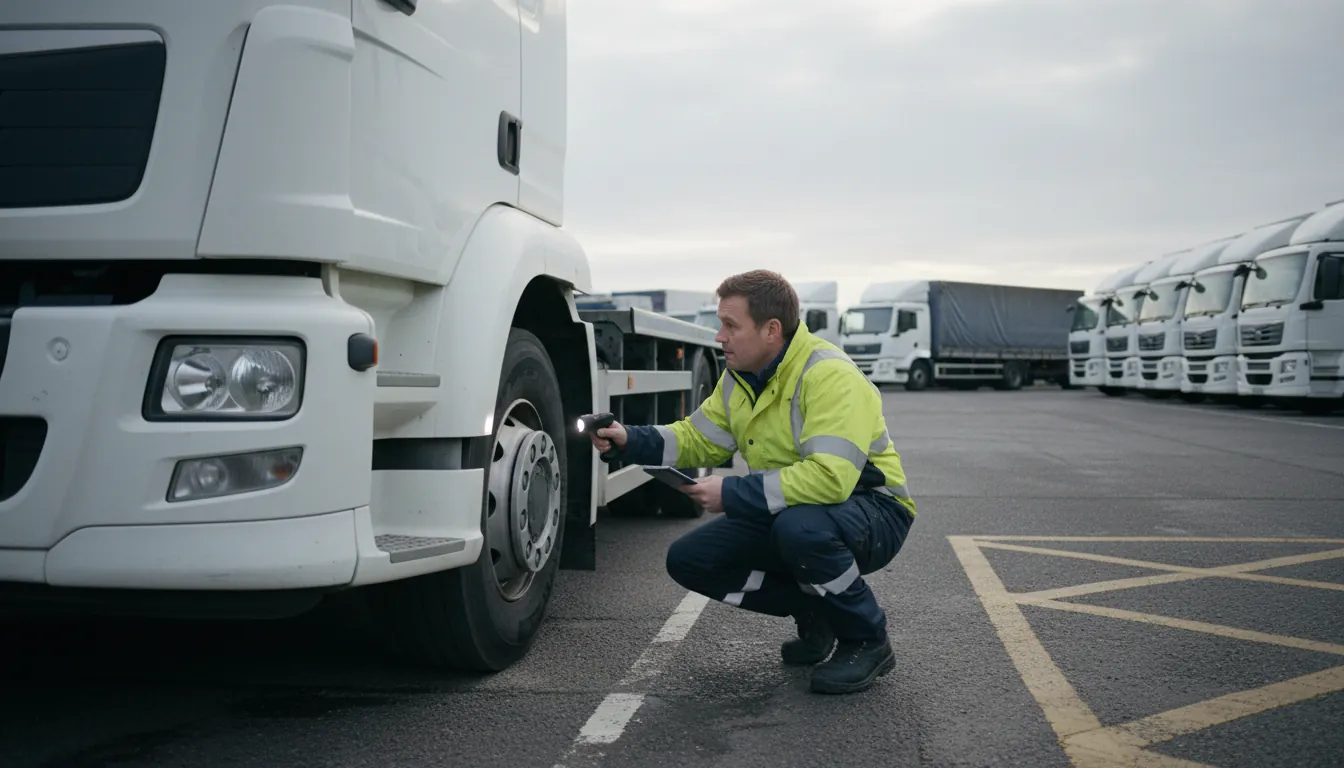
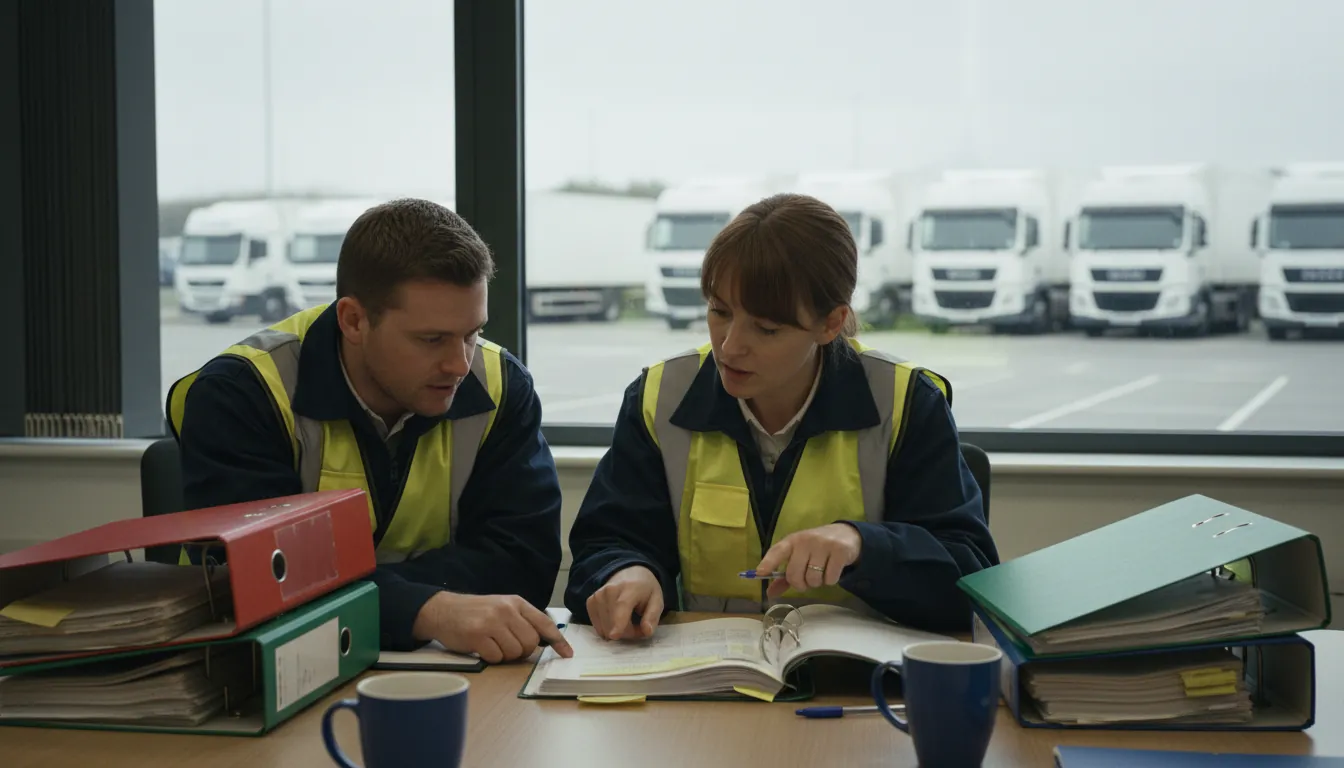
As a transport compliance consultant for London operators, we come down for the gap analysis, the vehicle checks, the mock audit and the audit day. We handle the documents from our office in between, so you are not paying for a consultant to sit in traffic. We also work with operators from the North and Midlands who have won London contracts and need to meet London rules quickly.
The London rules for goods vehicles
Direct Vision Standard and the HGV Safety Permit
Every HGV over 12 tonnes driven in Greater London needs an HGV Safety Permit from TfL. Since 28 October 2024, a vehicle needs a Direct Vision Standard rating of three stars or more, or must be fitted with the Progressive Safe System, to get one. The Progressive Safe System includes camera monitoring and moving-off information systems. Driving without a permit risks a penalty charge of up to £550. TfL plans to review the scheme again in 2028, with any changes coming in from October 2030. Our guide to direct vision in the UK and Europe explains how this links to the EU rules.
Low Emission Zone, not ULEZ, for lorries
Lorries over 3.5 tonnes do not pay the Ultra Low Emission Zone charge. They fall under the London-wide Low Emission Zone, which requires Euro VI. A lorry that does not meet it pays £100 a day if it meets Euro IV or V for particulates, or £300 a day if it is older. Vans up to 3.5 tonnes are covered by ULEZ instead, which requires Euro 6 for diesel vans.
Congestion Charge
The Congestion Charge rose to £18 a day on 2 January 2026. Electric vans and HGVs registered for Auto Pay get a 50% discount.
Safer Lorry Scheme and London Lorry Control Scheme
The Safer Lorry Scheme has required most lorries over 3.5 tonnes in London to have side guards and Class V and VI mirrors since 2015, the same equipment FORS asks for at Bronze. Separately, the London Lorry Control Scheme, run by London Councils, controls the use of lorries over 18 tonnes on many London roads at night and at weekends. Drivers must follow the permitted routes during those hours.
FORS and CLOCS for London contracts
FORS is not a legal requirement, even in London. Many London clients write it into their contracts, especially in construction, utilities, waste and public sector work. Where a client has adopted the CLOCS Standard (Version 5, November 2024), fleet operators must meet the requirements described as Silver in the FORS Standard. FORS Silver is the usual way to show that, though CLOCS accepts equivalent schemes.
At Bronze, FORS requirement V6 asks for side under-run protection and Class V and VI mirrors, or a camera monitoring system. Cameras, proximity sensors and audible left-turn warnings are Silver requirements under S6. A DVS rating of three stars or more plus a warning system and rear camera, or the Progressive Safe System, is one way to meet S6, so we plan the DVS permit and FORS Silver together. All audits from 1 September 2026 are against FORS Standard version 7.2. See our FORS service for how we run it.
Licensing and enforcement
Operating centres in Greater London, Kent, Surrey, East and West Sussex, Brighton and Hove and the Medway towns come under the Traffic Commissioner for London and the South East of England. Many London fleets are based outside that area, though. An operating centre in Essex, Thurrock or Hertfordshire is licensed by the East of England Commissioner, even if every load goes into London.
Enforcement in the capital is joined up. Since 2015, the London Freight Enforcement Partnership has brought together TfL, DVSA, the Metropolitan Police and the City of London Police. It uses shared intelligence and automatic number plate recognition to target unsafe vehicles and operators. It grew out of the Industrial HGV Task Force, set up in 2013 to target unsafe lorries working in construction and waste. Defective vehicles, unlicensed drivers and false tachograph records lead to prohibitions, prosecutions and reports to the Traffic Commissioner.
How we help London operators
- FORS Bronze, Silver and Gold, planned alongside your DVS permits.
- Health and safety for site deliveries, tipping, sheeting and loading.
- Driver handbooks covering London routes, vulnerable road users and site rules.
- Fleet set-up for new London operators, from the licence to the first permit.
Sources and further reading
- Direct Vision Standard strengthened (TfL newsroom)
- New tighter LEZ standards for HGVs in London (Mayor of London)
- The CLOCS Standard (CLOCS)
- London Lorry Control Scheme FAQs (London Councils)
- Goods vehicle applications and decisions: London and the South East (GOV.UK)
- Enforcement partnership to make London's streets safer (TfL)
- Changes confirmed to the Congestion Charge (Fleet News)
- FORS S6 vehicle safety equipment (FORS)
Checked against the sources above on 5 October 2026.