What ISO 9001 means for a haulage company
ISO 9001 is the international standard for quality management systems. It does not tell you how to run a lorry. It requires you to define how you deliver your service, control the things that can go wrong, measure how you are doing and improve. For a haulage or distribution business that means bookings, planning, vehicle and driver readiness, subcontracted work, proof of delivery, damage and complaints, all working to a documented, checked system.
Clients ask for it because it saves them auditing you themselves. Pharmaceutical and food supply chains, public sector contracts and high-value retail logistics commonly specify ISO 9001 in tenders, and the certificate is only worth something if it comes from an accredited certification body. We build ISO 9001 for haulage companies from the gap analysis to the certification audit, and we write the system around your operation rather than around a template.
ISO 9001:2026 is here
ISO published ISO 9001:2026 on 16 September 2026, and BSI has published it in the UK as BS EN ISO 9001:2026. It replaces ISO 9001:2015, which BSI now lists as withdrawn. The 2015 edition is still the basis of most current certificates and stays valid during the transition.
The ten-clause structure is the same, now aligned with the latest Harmonized Structure that ISO uses for all its management system standards. That makes it easier to run ISO 9001 alongside ISO 14001 or ISO 45001. The main changes are:
- Quality culture and ethical behaviour. Top management must promote a culture of quality and ethical behaviour, not just sign the quality policy.
- Risks and opportunities. Clause 6.1 is clearer that risks and opportunities are considered separately, to support better planning decisions.
- Change management. Stronger requirements for planning changes to the system and the operation, such as a new depot, a new contract or a new IT system.
- Climate change. Organisations must consider whether climate change is a relevant issue (clause 4.1) and whether interested parties have climate-related requirements (clause 4.2). This came in through the February 2024 amendment, ISO 9001:2015/Amd 1:2024, and is now part of the main text.
- Expanded guidance. A larger Annex A explains the intent of the requirements to help them be applied consistently.
For a transport operator the climate change point is not a box-tick. Customer decarbonisation targets, emissions reporting requests, low emission zones and fleet transition plans are exactly the kind of external issues and interested-party requirements auditors will expect you to have considered.
Transition dates
The transition is governed by Global ACI's transition requirements, published on 16 September 2026. The three-year period runs as follows:
| Date | What happens |
|---|---|
| 16 September 2026 | ISO 9001:2026 published. Transition period starts. |
| 31 March 2027 | Accreditation bodies to be ready to assess certification bodies against the 2026 edition. |
| 30 June 2027 | Certification bodies submit transition declarations. |
| 30 September 2027 | Accreditation bodies complete transition decisions. |
| 31 March 2028 | New and initial accredited certifications may only be issued to ISO 9001:2026. |
| 30 September 2029 | Deadline for organisations certified to ISO 9001:2015 to complete their transition. 2015 certificates end at this date. |
Transition can take place during a scheduled surveillance or recertification audit, or at a separate transition audit.
What this means if you are starting now
Build to ISO 9001:2026. A system that meets the 2026 edition meets everything the 2015 edition asked for, and you will need it by September 2029 regardless. Whether your first certificate is issued to 2015 or 2026 depends on when your certification body is accredited for the new edition. We check that with the certification body at the start, so you are not paying for a transition audit soon after your first certificate.
If you already hold ISO 9001:2015
Plan the transition into a surveillance or recertification visit before September 2029. In practice that means a gap analysis against the 2026 changes, updates to context, leadership, risk and change management, a round of internal audits and a management review that covers the new requirements. Leaving it to the last audit cycle risks a crowded certification body diary and a certificate that lapses.
The ten clauses of ISO 9001, applied to transport
Clauses 1 to 3 cover scope, references and definitions. Clauses 4 to 10 contain the requirements.
- Clause 4, Context of the organisation. The internal and external issues that affect your service, including climate change, the interested parties and their requirements, and the scope of your system. For a haulier, interested parties include customers, the Traffic Commissioner, DVSA, insurers, drivers and subcontractors.
- Clause 5, Leadership. Top management commitment, the quality policy, roles and responsibilities, and from 2026 a culture of quality and ethical behaviour.
- Clause 6, Planning. Risks and opportunities, quality objectives and planning of changes. Typical objectives are on-time delivery, damage and claims rates, complaint response times and inspections completed on time.
- Clause 7, Support. People, competence, awareness, communication, documented information, and equipment that needs calibrating or verifying, such as temperature probes and data loggers.
- Clause 8, Operation. How you plan and deliver the service: customer requirements, booking and planning, control of subcontract hauliers and other external providers, delivery and proof of delivery, and handling non-conforming work such as failed deliveries and damage.
- Clause 9, Performance evaluation. Monitoring and measurement, customer satisfaction, internal audit and management review.
- Clause 10, Improvement. Corrective action that deals with root causes, and continual improvement.
UKAS-accredited certification and Global ACI
Not all ISO 9001 certificates carry the same weight. A certificate from a certification body accredited by the United Kingdom Accreditation Service (UKAS) has been issued by an organisation that is itself independently assessed. Certificates from unaccredited bodies are often rejected by procurement teams, particularly in regulated sectors such as pharmaceuticals.
Accredited certificates are recognised internationally through the Global Accreditation Cooperation (Global ACI) Mutual Recognition Arrangement. Global ACI was formed when the International Accreditation Forum (IAF) and the International Laboratory Accreditation Cooperation (ILAC) merged, and has operated since 1 January 2026. Its arrangement covers the scope of the former IAF MLA. Existing accreditation marks continue in use while the change beds in. We work only with UKAS-accredited certification bodies and will recommend one suited to your sector and size.
What a certification auditor will ask a haulier for
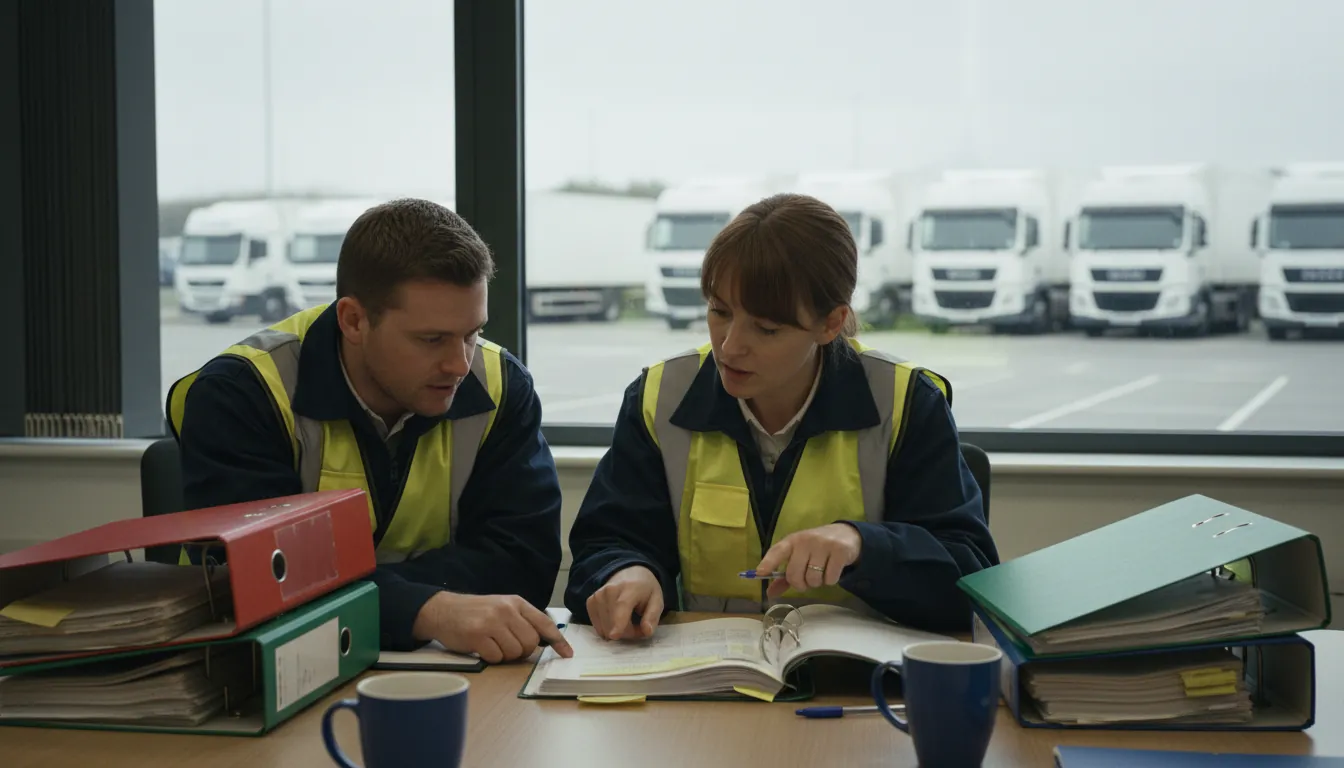
A certification audit is a sampling exercise. The auditor picks a handful of jobs, customers, vehicles and staff and follows the trail. For a transport business, expect to be asked for:
- The customer's requirements for a sampled job, and evidence you reviewed them before accepting the work.
- Planning records showing the vehicle and driver were suitable, available and legal for the job.
- Proof of delivery, and what happened when a delivery failed or goods were damaged.
- How you approve, monitor and review subcontract hauliers.
- Competence records for drivers, planners and warehouse staff, including licences and training.
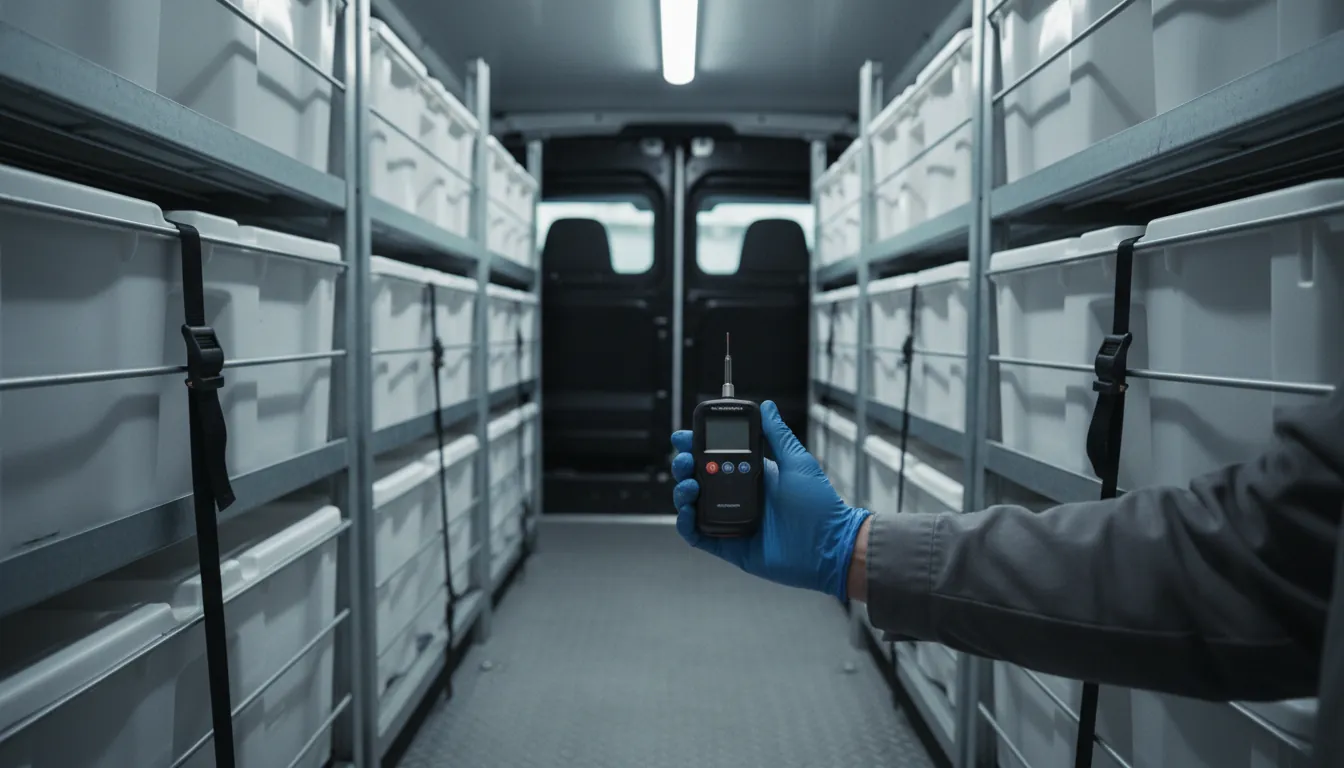
- Calibration or verification records for temperature monitoring equipment, where you carry temperature-controlled goods.
- Your quality objectives, the latest figures and what management decided at the last review.
- Complaints and corrective actions, and evidence the root cause was dealt with.
- Internal audit reports that found real issues and saw them closed.
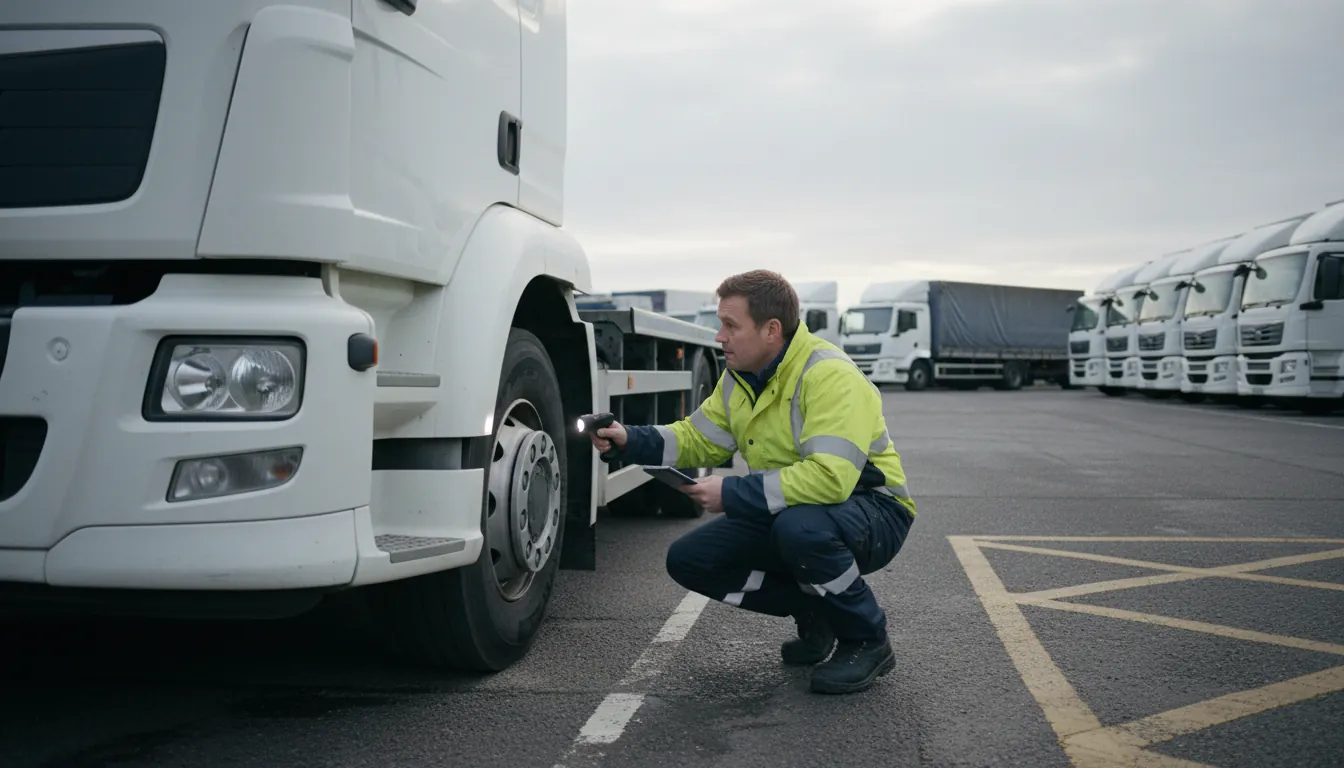
Much of this already exists in a well-run transport office. Walkaround checks, defect reports, inspection records and driver licence checks all double as quality records. Operators who use Roadworthy, our fleet compliance software, can pull those records into a compliance pack rather than hunting through folders. The work is usually joining the records up and showing they are reviewed, not creating new paperwork.
Where haulage companies go wrong with ISO 9001
- Buying an off-the-shelf quality manual that describes a different business. Auditors sample records and interview staff, and the gaps show quickly.
- A system run by one person in the office that drivers and planners have never heard of.
- No control over subcontract hauliers, even though they deliver your service to your customer.
- Objectives that are never measured, or measured and never reviewed.
- Internal audits that tick boxes instead of testing how the work is really done.
- Running ISO 9001, FORS and customer audits as three separate paper systems instead of one.
What J&JL delivers
- Gap analysis against ISO 9001:2026, with a prioritised action plan and timeline.
- Quality policy and system documentation sized to your operation. Small fleets get a lean system, not a binder nobody opens.
- Process maps and procedures for booking, planning, delivery, subcontractor control, non-conformance and corrective action.
- Risk and opportunity register and change management process.
- Quality objectives with the measures to track them.
- Internal audit programme, including training for your internal auditors.
- Management review process covering every required input and output.
- Certification body liaison and a pre-certification audit.
- Transition support for operators moving from ISO 9001:2015.
Where you also hold or are working towards FORS or GDP for pharmaceutical transport, we build one system that serves all of them. Complaints, collisions, maintenance and training records only need to exist once.
How long it takes
For most transport operators, first-time certification takes four to six months from gap analysis to the certification audit. That allows time for the system to run, with records, an internal audit and a management review, before the certification body visits. In one of our case studies, a 12-vehicle cold chain pharmaceutical carrier with no documented quality system achieved UKAS-accredited ISO 9001 certification in month 5, first time, with no major non-conformities.
Sources and further reading
- ISO: ISO 9001:2026 published
- Global ACI: transition requirements for ISO 9001:2026
- BSI: BS EN ISO 9001:2026 is here
- Global ACI launch (IAF and ILAC merger)
- United Kingdom Accreditation Service (UKAS)
Checked against the sources above on 5 October 2026.