What the Direct Vision Standard is
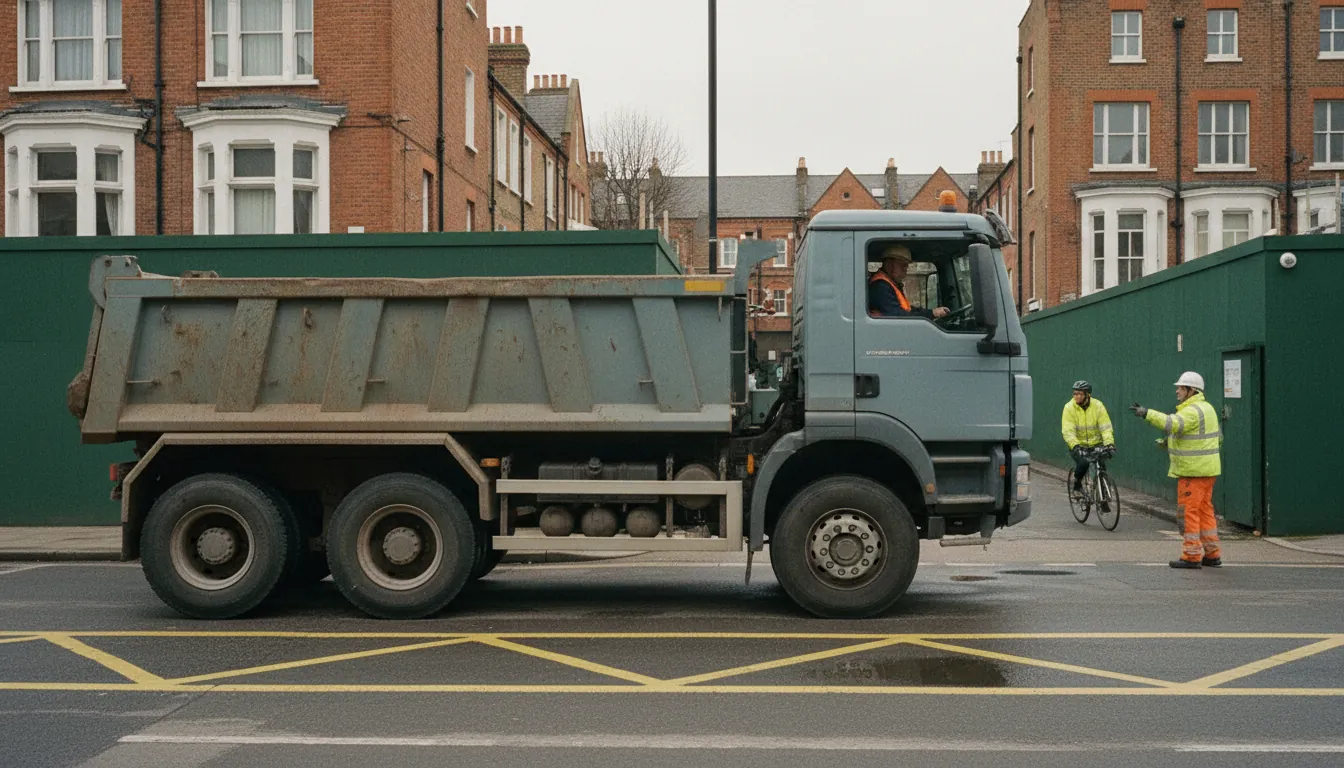
The Direct Vision Standard (DVS) rates HGVs over 12 tonnes gross vehicle weight from zero to five stars. The rating measures how much a driver can see directly through the cab windows, not through mirrors or cameras. Zero stars is the poorest view. Five stars is a low-entry cab with large glazed areas.
The star rating is set for each vehicle model and configuration and is issued by the manufacturer. You cannot change it by fitting equipment. What you can change, for a lower-rated vehicle, is whether it qualifies for a permit.
Every HGV over 12 tonnes that enters or operates in Greater London needs an HGV Safety Permit from Transport for London. The scheme runs 24 hours a day, every day of the year. It applies to UK and foreign-registered vehicles alike.
The rules now: 3 stars or the Progressive Safe System
The scheme tightened on 28 October 2024. Since then, a vehicle needs a DVS rating of at least 3 stars, or must be fitted with the Progressive Safe System (PSS), to get a permit. Vehicles given a grace period had until 23:59 on 4 May 2025 to comply. That grace period is over.
Operating an HGV over 12 tonnes in Greater London without a valid permit can lead to a Penalty Charge Notice of up to £550. TfL enforces the scheme with cameras, so a non-compliant vehicle can pick up charges quickly.
What the Progressive Safe System requires
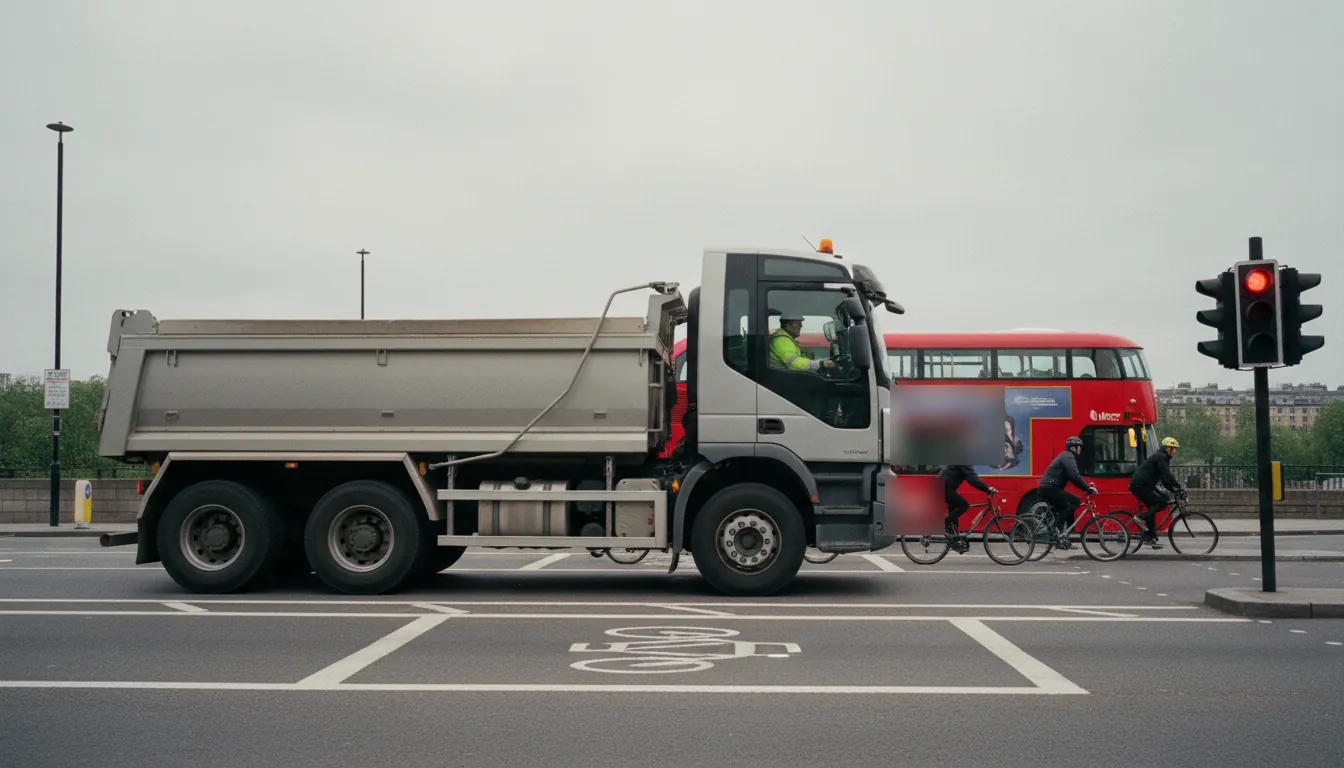
The PSS is aimed at the collisions that most often kill people walking and cycling where vision is a factor: moving off from stationary and turning left. For vehicles rated zero to two stars it requires:
- A camera monitoring system (CMS) on the nearside to remove the remaining nearside blind spot.
- Class V and VI mirrors, or a CMS that replaces them, or a combination, on the front and nearside.
- A blind spot information system (BSIS) giving full coverage down the nearside of rigid vehicles, to detect vulnerable road users.
- A moving off information system (MOIS) at the front of the vehicle, to warn the driver of a vulnerable road user.
- Side under-run protection on both sides, except where this is not practicable.
- An audible warning for vulnerable road users when the vehicle turns left (or right, for left-hand-drive vehicles).
- External warning signage showing the hazards around the vehicle.
For left-hand-drive vehicles, "nearside" means the right-hand side. TfL publishes the full technical specification and the evidence it needs, such as fitting certificates and photographs. Check the current guidance on the TfL website before you buy or fit equipment.
Vehicles rated 3 to 5 stars
A vehicle rated 3 stars or more still needs a permit, but it does not need the PSS to get one. It was not affected by the October 2024 changes.
What happens next in London
TfL has said it "will review the DVS and HGV safety permit Scheme again in 2028 with any further changes, if deemed necessary, introduced from October 2030". We found no change planned for 2026 or 2027.
That gives fleet buyers a useful planning date. A vehicle you buy in 2026 on a five-year finance agreement will still be in your fleet in October 2030. Choosing a higher star rating now reduces the risk that a future tightening catches it.
Direct vision in the EU General Safety Regulation
London is no longer alone. The EU General Safety Regulation, Regulation (EU) 2019/2144 (often called GSR2), sets enhanced direct vision requirements for buses, coaches and lorries (categories M2, M3, N2 and N3):
- from 7 January 2026 for new vehicle types approved in the EU, and
- from 7 January 2029 for all newly registered vehicles in those categories.
The same regulation already requires blind spot information systems on new HGV types from 6 July 2022 and on all new registrations from 7 July 2024. Manufacturers who sell across Europe are designing cabs to meet these rules, so the cabs on sale in the UK are changing too.
The position in Great Britain
GSR2 does not apply automatically in Great Britain. Vehicle safety requirements here are set through GB type approval. On 16 July 2026 the Department for Transport published its response to the consultation "Mandating vehicle safety technologies in GB type approval". It confirms that 18 technologies will be required, including direct vision, blind spot information systems and moving off information systems, with revised implementation dates to be set in legislation.
We will update this guide when the GB dates are confirmed in legislation. Until then, do not rely on dates quoted by sales material. Ask the manufacturer what approval the vehicle holds and which safety systems it is built with.
A separate change took effect on 1 February 2026: all M and N category vehicle types manufactured for sale in Great Britain must hold full GB or UK(NI) type approval. That is a manufacturer obligation. It does not affect vehicles already registered.
How DVS links to FORS and CLOCS
The same equipment appears in three schemes, which is why it pays to plan them together.
- FORS Bronze, V6: HGVs need side under-run protection on both sides and Class V and VI mirrors, or an equivalent camera monitoring system.
- FORS Silver, S6 (Standard v7.2): cameras, sensors and audible warnings. S6 accepts a DVS rating of 3 stars or better plus an audible left-turn and reversing warning and a rear camera, or the DVS Progressive Safe System, among other routes. Rigid vehicles of 7.5 tonnes and over need a rear camera.
- CLOCS Standard (Version 5, November 2024): fleets serving CLOCS sites must meet the FORS Silver benchmark. FORS Silver is the usual way to show it.
An HGV fitted with a compliant PSS for its London permit will cover most of what S6 asks. Operators who specify equipment separately for each scheme often end up paying twice.
Other London rules for HGVs
- Low Emission Zone: lorries over 3.5 tonnes do not pay ULEZ. They fall under the London-wide LEZ, which requires Euro VI or a daily charge of £100 (Euro IV and V) or £300 (older vehicles).
- Congestion Charge: £18 a day from 2 January 2026.
Our London page covers the wider picture for operators running into the capital.
Practical advice for buying and running HGVs
- Ask for the star rating in writing before you order. The rating depends on cab type, height and configuration, so two trucks from the same range can score differently. Get the manufacturer's confirmation for the exact specification.
- Prefer 3 stars or better for London work. It avoids the PSS requirement for the permit and gives you more margin when TfL reviews the scheme in 2028.
- If you must buy a lower-rated vehicle, have the PSS fitted at build. Body builders and dealers can fit it before delivery. Keep fitting certificates and photographs, because TfL asks for evidence.
- Specify with FORS Silver in mind. Add a rear camera on rigids of 7.5 tonnes and over, and make sure audible warnings and signage meet S6 as well as the PSS.
- Buying used? Check the permit. Confirm the vehicle's rating and that its PSS equipment is fitted, working and evidenced before you rely on it for London work.
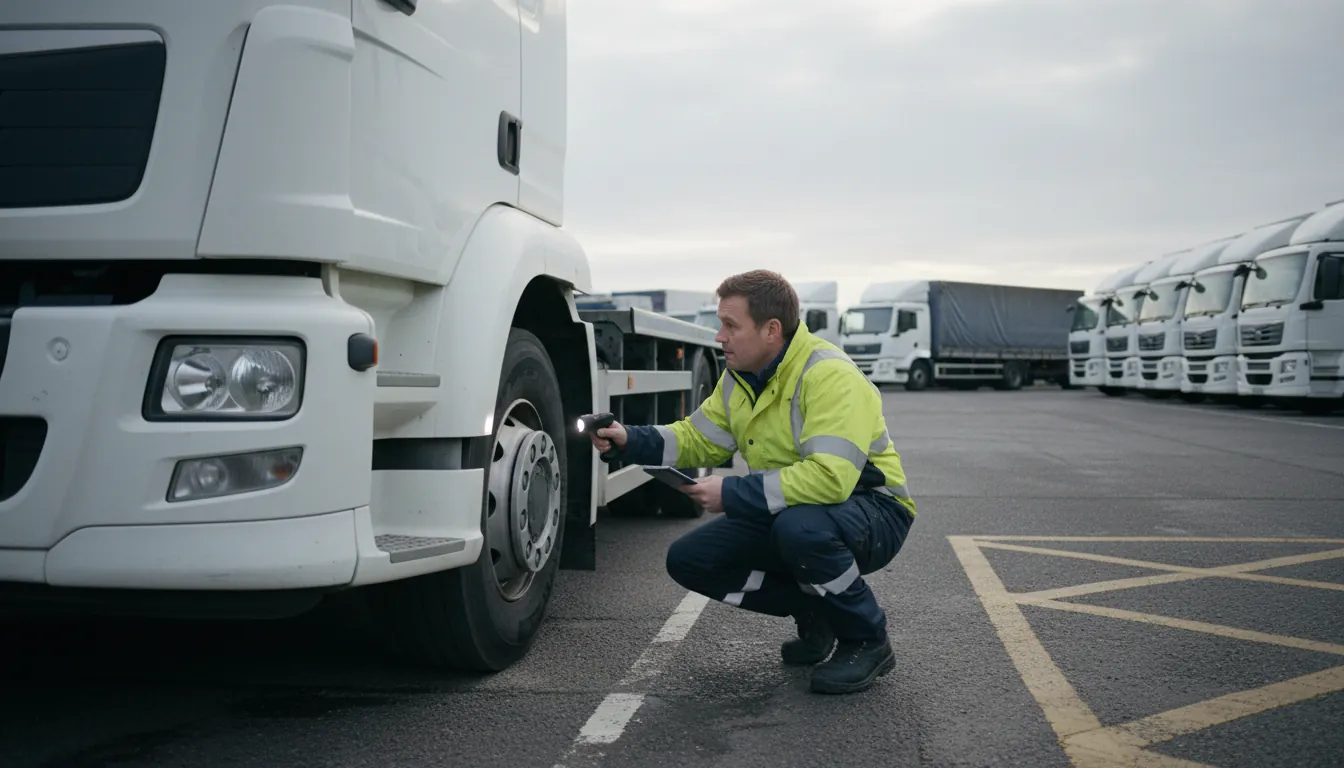
- Add the equipment to daily checks. Cameras, sensors, audible warnings and signage should be on the walkaround check, with defects reported and repaired like any other.
- Train drivers to use the systems. A camera is only useful if the driver checks the screen at the right moment.
Roadworthy, our fleet compliance software, records daily walkaround checks by QR code on the driver's phone and tracks each defect through to repair. That makes it easy to show that safety equipment is checked every day. See Roadworthy.
How J&JL can help
We help operators plan vehicle safety equipment across DVS, FORS and CLOCS in one exercise, check permit evidence, and build the walkaround and defect processes that keep equipment working. Our FORS consultancy includes S6 planning for operators going for Silver.
Sources and further reading
- TfL newsroom: Direct Vision Standard strengthened (28 October 2024)
- RHA: DVS Progressive Safe System FAQs
- Regulation (EU) 2019/2144 (General Safety Regulation)
- DfT: Mandating vehicle safety technologies in GB type approval, government response
- VCA: new GB/UKNI type approval legislation now in effect
- FORS S6 Vehicle safety equipment
- The CLOCS Standard
Checked against the sources above on 5 October 2026.